
As Seen On: mepmiddleeast.com Jan 9, 2024
As Seen On: mepmiddleeast.com Jan 9, 2024
Topics: Sustainability, HVAC, In The Media

As Seen On: phcppros.com May 27, 2025
Mechanical Technologies, a pioneering provider of PHVAC and fluid-flow solutions, based in New York City, has reached an agreement to partner with Armstrong Fluid Technology as a manufacturer’s representative.
Topics: HVAC, In The Media, Energy Efficiency
.png)
By Jacob Wolfe, Global Key Account Manager, Armstrong Fluid Technology
The task of achieving maximum energy efficiency for mission-critical cooling applications is never straightforward. In data centers, in particular, extreme scrutiny of environmental performance is constant, in a situation which demands maximum reliability and zero downtime.
With energy requirements increasing steeply, driven largely by AI, availability of power from the grid is a major issue with the potential to limit expansion, as is the need to secure the goodwill of stakeholders such as local planning authorities. These issues are magnified by commercial and technological factors, such as the need for adaptability and flexibility to address short equipment update cycles.
Topics: Sustainability, HVAC, In The Media, Datacentres, DataCenterCooling, Demand-based control
As Seen On: hpac.com June 24, 2026
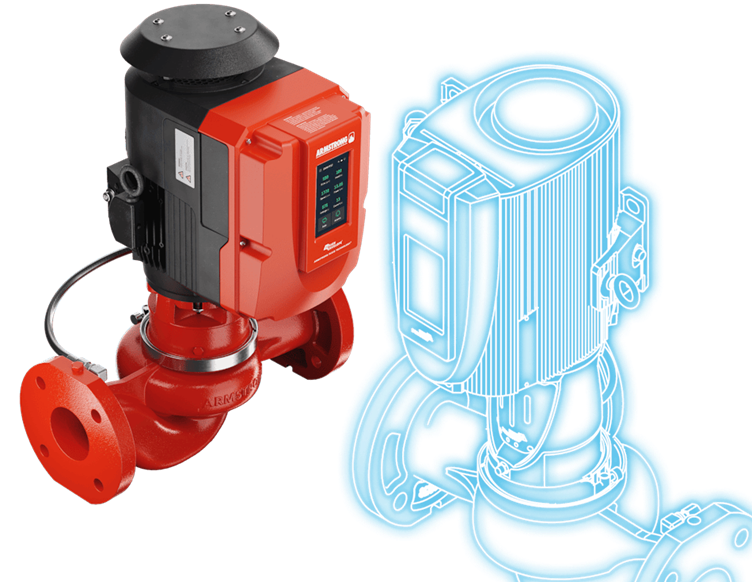
Topics: HVAC, HVAC System, In The Media, Digital pump optimization, HVAC energy efficiency, Digital Twins, High-Performance HVAC Systems
By: Pratik Sharma, Global Director, Building Services & Performance Management, Armstrong Fluid Technology
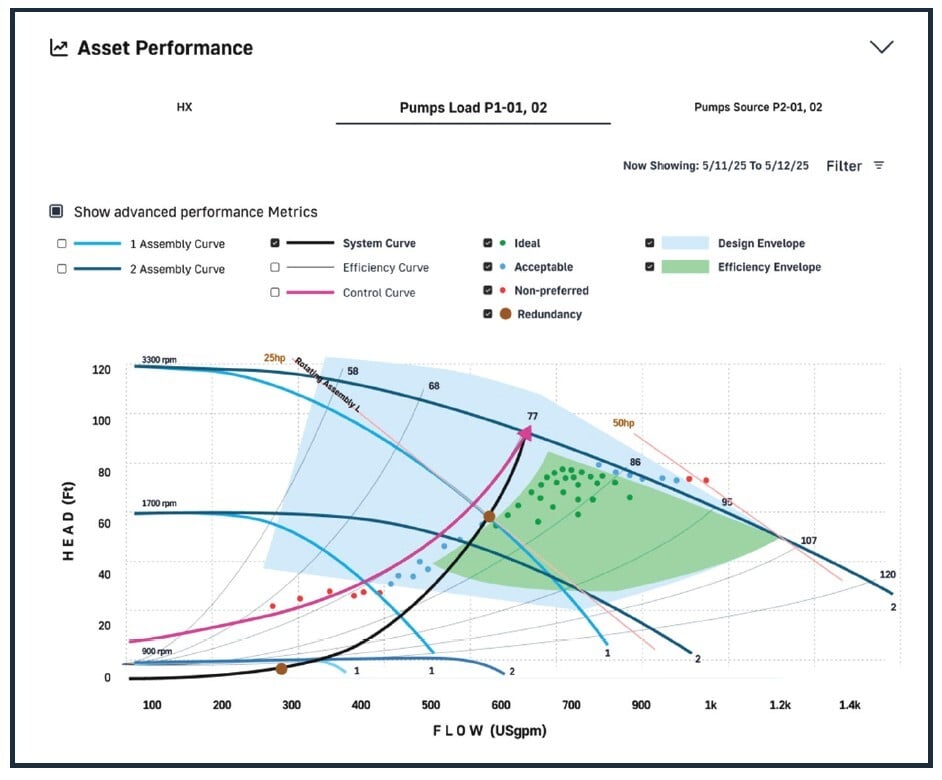
Consulting Engineers designing HVAC systems face increasing pressure to deliver lower energy consumption, reduced carbon impact, and long-term reliability. At the same time, system complexity has increased with the widespread adoption of digital controls, variable speed equipment, and integrated building systems.
Topics: Armstrong Fluid Technology, HVAC, Hydronics, In The Media, Armstrong HVAC solutions, ASHRAE
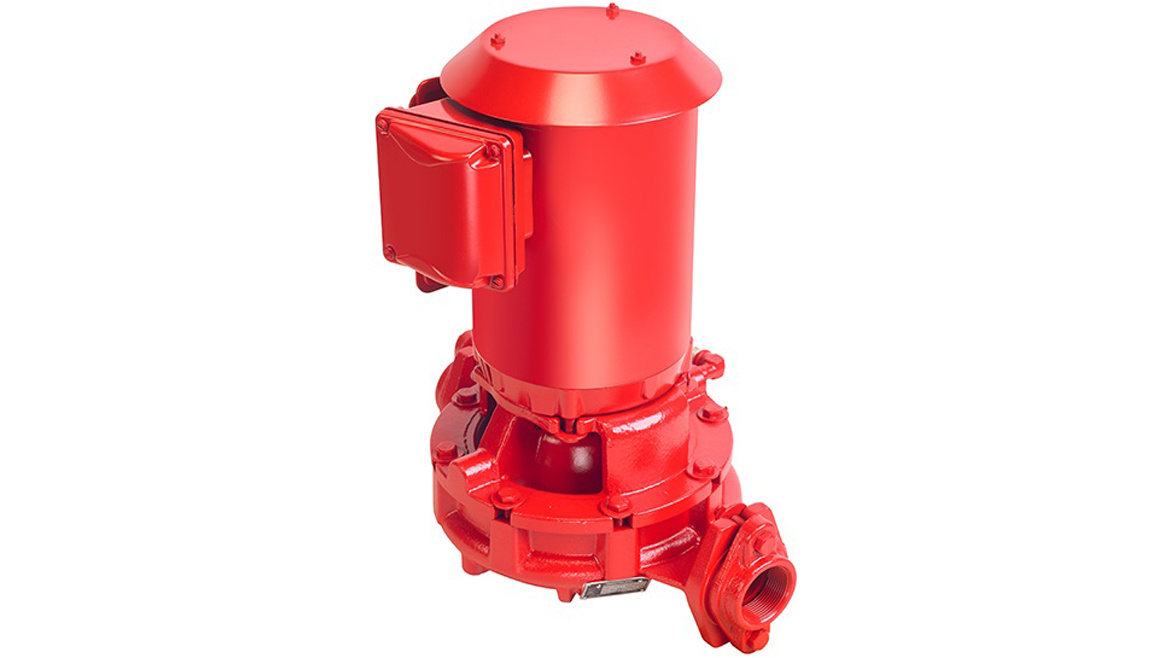
The family of Constant Speed Vertical-In-Line Fire Pumps has been expanded with a maximum 500 USGPM flow for both 60hz and 50hz markets and featuring new high-pressure ratings of up to 160PSI. They eliminate the need for offset piping and motor realignment. They also use less floor space than comparable Horizontal Split Case designs.
Topics: Fire Pumps, HVAC, In The Media, Vertical In-Line
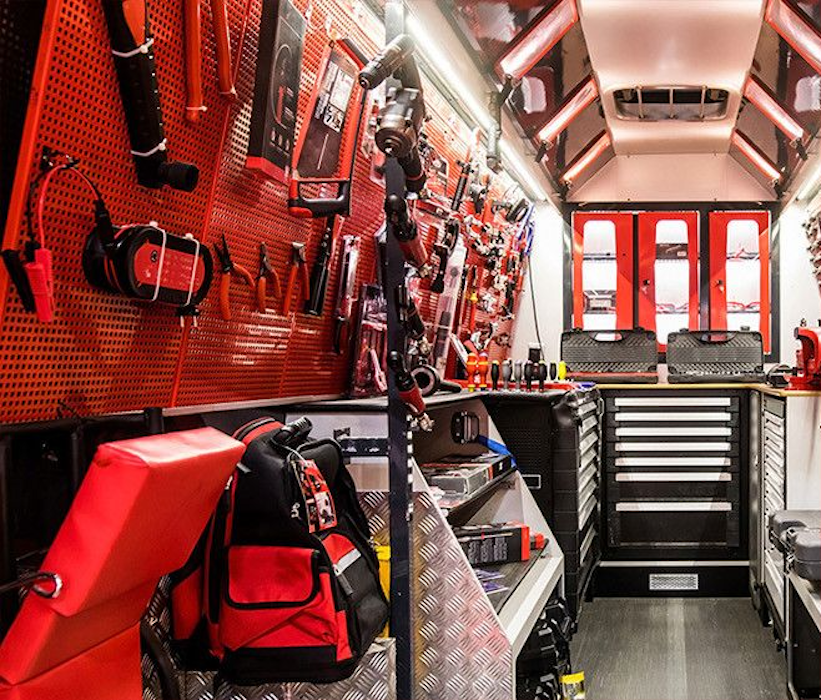
Armstrong Fluid Technology, a global leader in HVAC and fluid flow solutions, has announced a new partnership with Parts Town, a leading distributor of original equipment manufacturer (OEM) HVAC parts. This collaboration will improve access to critical components and deliver expanded service excellence to customers.
Topics: HVAC, In The Media, Armstrong's Service, Replacement Parts, Parts
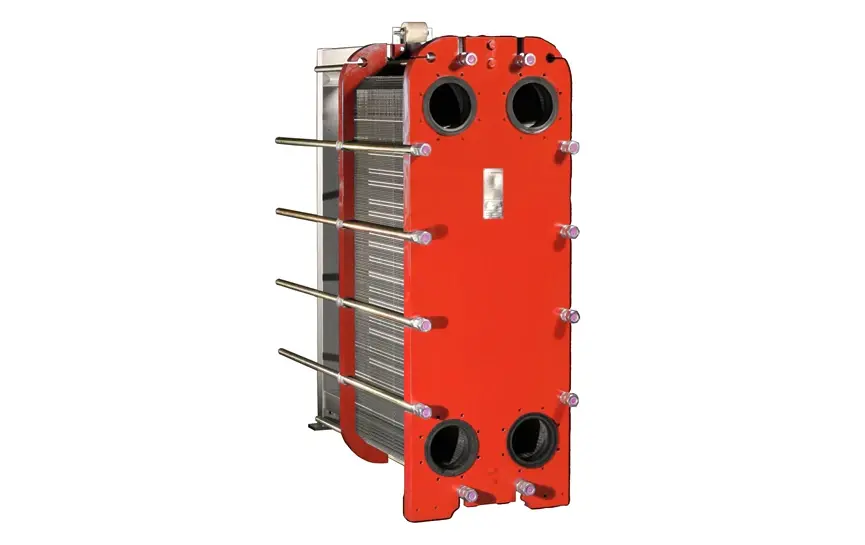
Heat exchangers are a crucial piece of any application that involves heat transfer. In residential buildings heat exchangers can be found in radiant floor applications, pools, or domestic drinking water applications. In commercial buildings, heat exchangers are used for free cooling applications, chiller and heater loops and district energy. In Industrial and Process applications, heat exchangers are found in areas such as steam plants transferring heat from steam to water. They are also used in the refrigeration cycle as evaporators and condensers in chillers to save space and improve efficiency.
Topics: HVAC, Heat Exchangers

Power factor is a measure of how effectively electrical power is being used by a system. It is defined as the ratio of real power (measured in kilowatts, kW) to apparent power (measured in kilovolt-amperes, kVA). Mathematically, it is expressed as:
Topics: Cooling Systems, Heating Systems, HVAC, Pumps, Air Conditioning

Harmonics are voltage or current waveforms that are distorted from their fundamental sinusoidal shape. They are multiples of the fundamental frequency (50 or 60 Hz) and are generated by non-linear electrical loads. These are loads that draw current in abrupt pulses rather than in a smooth sinusoidal manner. Common sources include:
Topics: Cooling Systems, Heating Systems, HVAC, Pumps, Air Conditioning